From an unlikely theatre play bringing together ex-combatants from divided communities, to a full-fledged organization offering community and hope in a country where sectarianism is the norm.
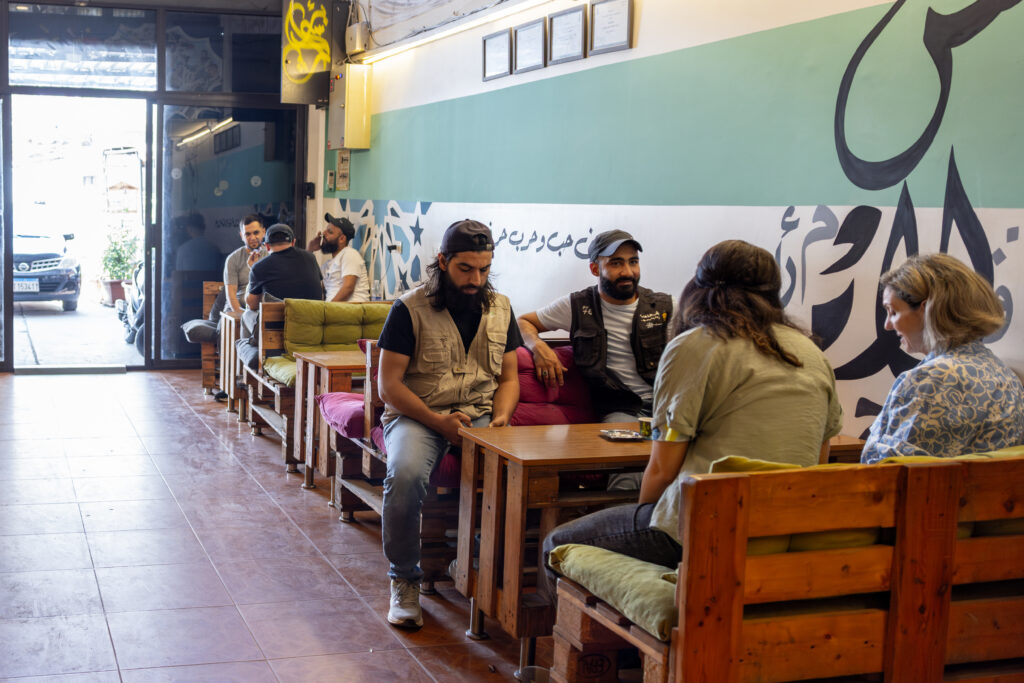
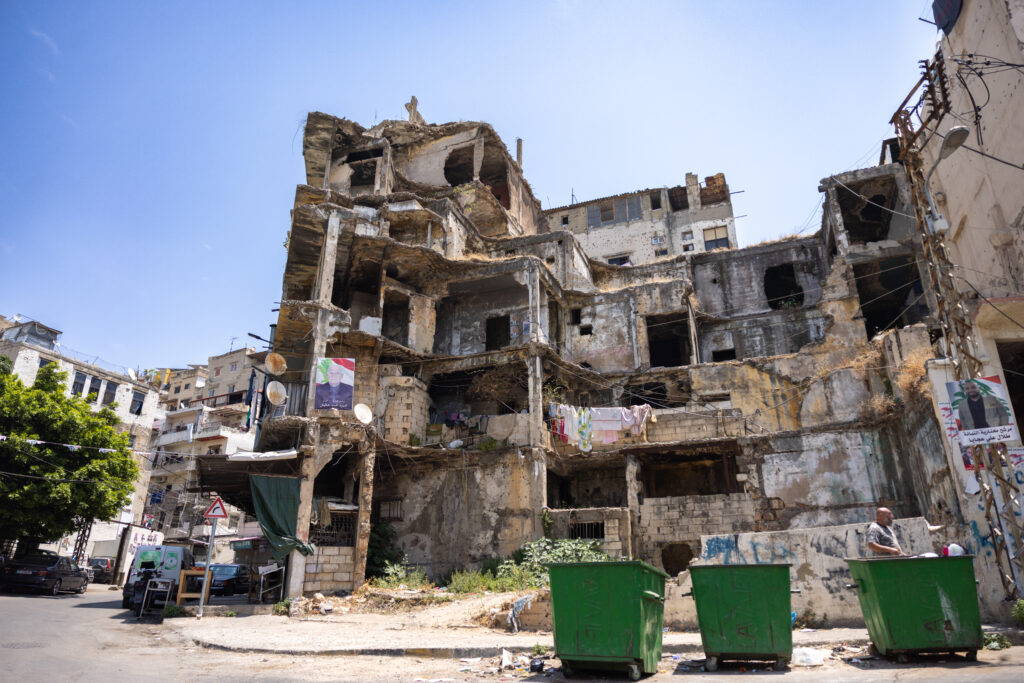
It’s a busy Thursday at Kahwetna café on Syria Street, once a frontline dividing the warring neighborhoods of Bab al-Tabbaneh and Jabal Mohsen.
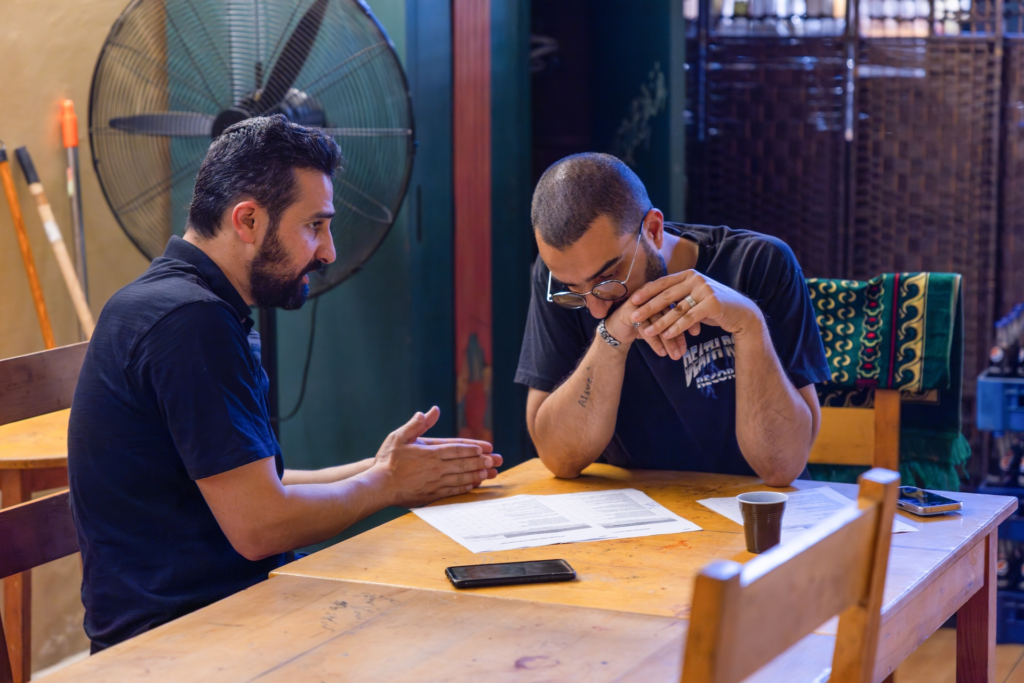
Today, the café buzzes with laughter, coffee, and preparations for a community lunch. Kahwetna (“Our café” in Arabic) is more than your ordinary café, it is part of MARCH Lebanon, an NGO bringing together youth, and particularly ex-combatants, once on opposite sides of a brutal conflict.

The Thrill
“As a young man, I was like all the other boys who wanted to take a gun and shoot. I’d take a gun from anyone who handed one to me! Like a kid that is happy and excited about a new toy,”
recalls Mohammad Masri, now a staff member at MARCH. “You go crazy. I would run under the rain of bullets and jump… it felt like an exhilarating game… we didn’t really feel the actual danger of it.”
That illusion shattered when Mohammad was shot while trying to save friends. “When you’re young you think getting shot is nothing. But a bullet brings even the strongest man to his knees. So I really don’t wish that upon anyone. Not even my worst enemy.” That bullet paralyzed Mohammad from the waist down. On top of physical and emotional pain, he suffered the stigma of disability in a poor community. “I had very dark days. On some days I wanted to die. From the depression.”
Others faced a different fallout.
Abdullah Al Jundi was just 15 when he was jailed. He took to arms after his older brother was killed in the fighting. “They punished me for my reaction to my brother’s murder,” he says.
Samir Kanjo was arrested at 21 for smuggling funds to anti-Assad rebel groups in Syria. “Our society doesn’t look at ex-convicts in a good way. It was impossible for me to find a job after.”
“So imagine you have a man that can’t work for 7 years. What’s he to do? Go back to his old ways!” he emphasizes.
Stepping Inside MARCH
Each man came to MARCH differently, but they almost unanimously found their way to the organization through the promise of free food, that MARCH provides while organizing workshops, or work.
“I just wanted a job,” Ali Ammar admits. He joined upon the insistence of his cousin and currently helps around the center.
Mohammad was contacted after a video interview of him on the streets went viral. Hassan and Abdullah were encouraged by local community leader Ahmad Chaaban, one of the original MARCH members from the early days. Samir found MARCH on Facebook, when looking for cultural entertainment in the area.
First impressions were filled with doubt. Hassan admits, “I was scared at first… I didn’t know what to expect.”
“I was really against it at first,” says Ibrahim Tayyara. “Especially against sitting with people from the other side.”
Abdullah was resistant at first, still grieving his brother’s death. But Ahmad kept showing up at his door. “In the end I said ‘screw it,’ I’ll try it out,” Abdullah says.
“We Have the Same Pain”: From Hate to Understanding
Through workshops, theatre, debate, and more generally spending time together, MARCH slowly helped these men see the “enemy” as human.
Mohammad Masri came to understand that one person didn’t represent all. “The person that shot me is an individual. One person. Not the entire Jabal [Mohsen, the opposing neighborhood]. I can’t judge them all for this.” He saw how youth were being manipulated. “It’s all one big political game. And the victims are all the young men who senselessly died on either side… We are all victims, here (Tabbaneh) and up there (Jabal).”
Hassan Esmail shared that he “never had the opportunity to sit with someone from a different religion or sect.” At MARCH, he found that
“differences do not have to lead to conflict.”
He adds, “I am living with them [Alawites] as humans. I see the human in the other now. We need to understand that we’re all human.”
Zafer Al Hindi first doubted the theatre project but became curious.
“We have the same pain. The same struggles. The same country. We are the same. We are not different at all.”
Ibrahim Tayyara, who lost an aunt to the violence, said, “We grew up to hate.” But as he spent time at MARCH, he saw: “They’re just like me. My pain is their pain… The only thing that differentiates us is our sect.”
Abdullah, who took arms after losing his older brother, now says,
“I’m not the only one hurting. Both of our areas experienced the same thing… No one is a monster.”
In many ways, the organization’s success can be attributed to the fact that it meets people’s needs for contribution, connection, and growth.
Mohammad now works as an embroiderer with MARCH’s furniture boutique. “I no longer perceive myself as useless,” he says. “My own beliefs have changed.”
Zafer, who left school at seven, is now a video editor and tour guide. “All of this was so empowering for me,” he emphasizes.
Samir earned a university degree in Human Resources, and Abdullah now channels his energy into painting and embroidery. “When I get angry, I take it out through my art… I’m so happy with myself,” he says.
From ISIS Fighter to Head of Security
One of MARCH’s most dramatic transformations is Raed. After fighting with ISIS in Syria, Raed returned to Lebanon and vowed to bomb the MARCH café. Luckily by this time, the Lebanese Army was stationed in the area to maintain security, and he never found the right time. Years later, desperate, and jobless, he visited the center. Lea Baroudi, founder of MARCH, remembers him not looking her in the eye. He left in a haste after filling out a job application.
Today, Raed is MARCH’s head of security.
What changed him?
He told Lea that it was the first time in his life that he felt he was being treated “like a human being.” A small act, Baroudi offering to accompany him to a medical checkup he was reluctant to do, was pivotal. The medical checkup, mandatory of all new MARCH employees, triggered memories of beatings in prison. “He said, ‘I remember you spent 2 hours trying to convince me and at the end you said, I’ll go up there with you,” she recalled.
That compassion shattered his worldview. “Why would you do that?” he asked.
Six months before the interview, Raed’s friend died fighting in Iraq. He told Baroudi, “I feel I could have been him.” That friend also filled a job application alongside Raed on that first day in MARCH. “I should have made him come back,” he regrets.
Earning Back Trust
Despite the growth and camaraderie, the social stigma that comes with building bridges has not completely vanished. Oftentimes, it comes from within their own communities. “Some people see us as associating with those that killed and destroyed us,” says Ibrahim. But their community work is changing that.
By installing solar panels, distributing aid, and providing services, they’ve earned respect in their communities. “Now because of MARCH, they really see us as local leaders,” Ibrahim says. “They respect us.”
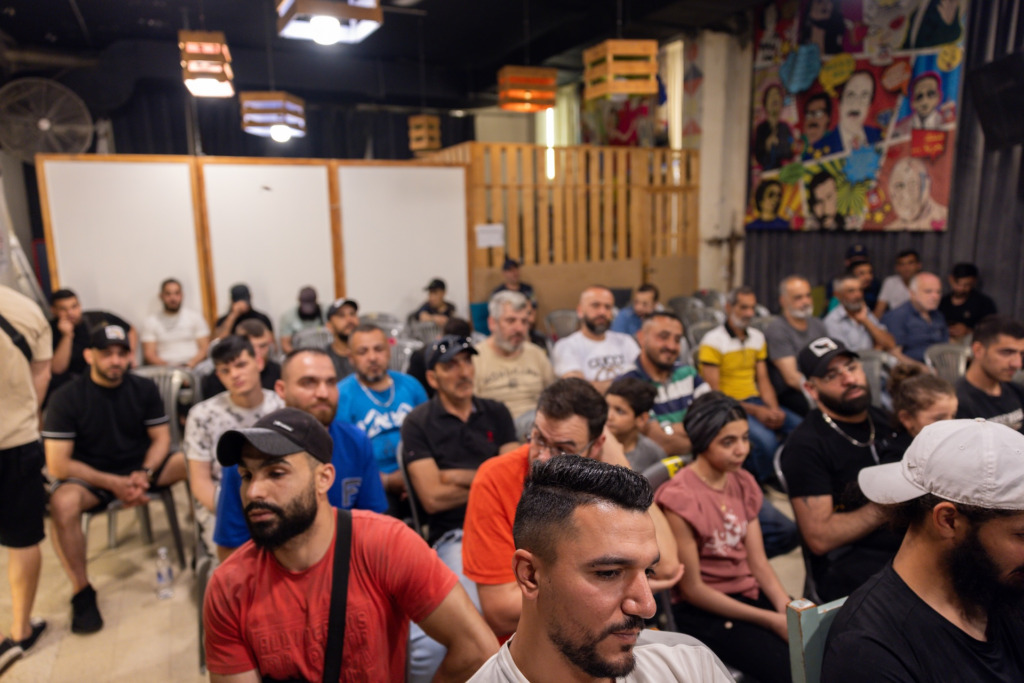
Community events, like MARCH’s monthly public lunches, allow neighbors to witness their work firsthand. “We have broken bread together,” Ibrahim says. “Most people have watched our videos and learned about our work.” Abdullah adds, “They see the better men we’ve become.”
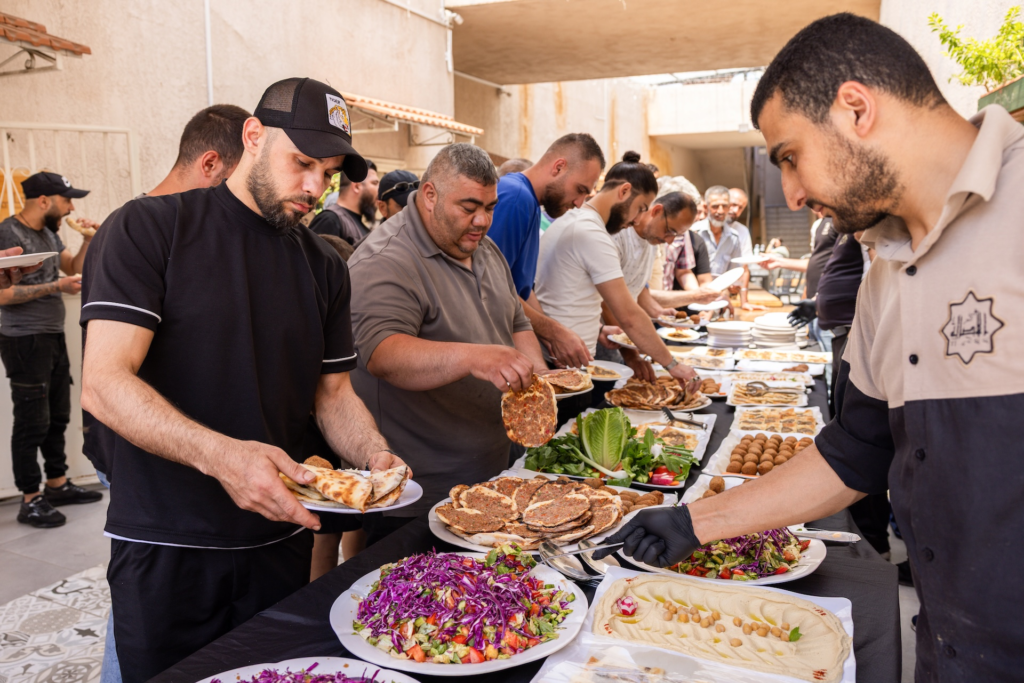
Zafer notes how much easier it is now for new people to join the organization today, in contrast to when things first got started. “They see how we are together. They see the camaraderie… and it’s easier. We paved the way, and we are here to set an example. It’s a duty at this point.”
“My hope is that this area stops being associated with destruction, and danger, and drugs,” says Ibrahim.
“We are an area of peace, not destruction.”