
Dialogue fails when our nervous systems are still at war.
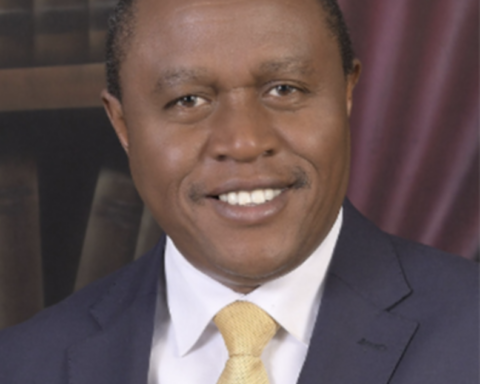
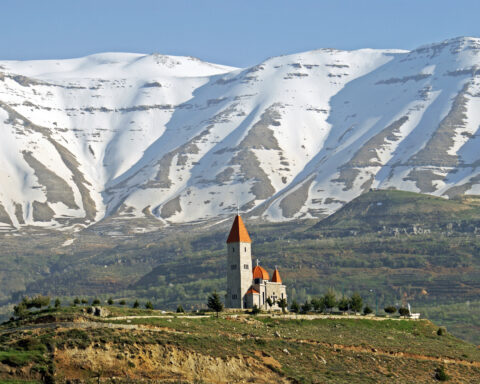
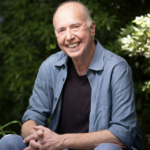
It is June 2025 in Beirut, Lebanon. Dr. Maram Hakim sits in his clinic across from the American University of Beirut, in a blue building overlooking the city’s daily rhythms. Outside, the hum of traffic and café chatter fills the air. Above it all, the low mechanical burr of an Israeli MK drone circles steadily overhead. It has become a part of the city’s soundscape, and to Hakim, it is a reminder of how close the past always is.
Now in his seventies, Hakim was a medical student and later a doctor during Lebanon’s 15 year civil war. Between 1975 and 1990, the country was torn apart by sectarian violence, kidnappings, shelling, and political chaos. He remembers classmates being killed, studying by candlelight in bomb shelters, hospitals overwhelmed by casualties, and physicians threatened by militias when lives could not be saved.
“Being a doctor at the time was both dangerous and grueling,” he recalls.
Those years would shape the rest of his life’s work. Hakim eventually became an integrative trauma therapist, focusing on somatic (body based) based intervention. Trauma, he explains, embeds itself not only in memory, but in the body. “The situation today is different, but in some ways, It’s a reopening of old wounds.”
Trauma Across Generations
Conflict is often discussed as a matter of strategy, ideology, or competing interests. Lived experience is an element that is far too often neglected. While classic International Relations theory positions states as “rational actors” vying for resources, it remains that states are run by humans, who are run by their emotions and trauma responses. Trauma, which can be understood as distress without resolve, does not simply disappear when armed violence ends and ceasefires are signed.
It is transmitted through parenting styles, coping patterns, beliefs, attachment styles, and as the research is increasingly suggesting, biological epigenetic mechanisms.
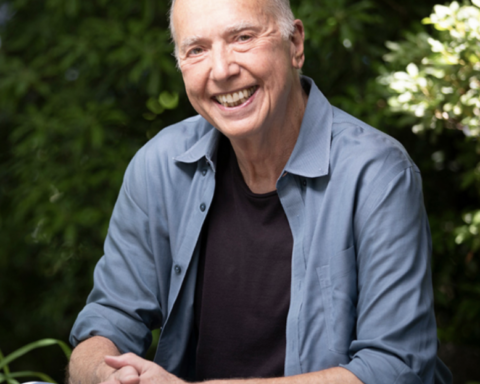
Rebecca Stone is the great-granddaughter of Holocaust survivors and has discerned how transgenerational trauma plays out in her own life. Based in New York, Stone is a Family Constellations Therapy Facilitator and the founder of Brooklyn Somatic Therapy, a therapy clinic focused on mind-body interventions.
She cites a famous study conducted at Emory University, where mice were conditioned with electric shocks, to fear the scent of cherry blossoms. “Researchers found that these mice’s offspring and grandchildren also showed fear responses to the same scent, despite having never been shocked themselves,” Stone explains. “The trauma had altered epigenetic markers on genes related to smell in the mice.”
Before becoming a therapist, Stone worked with Encounter, a peacebuilding organization that brought Jewish American leaders into Palestinian cities to listen and bear witness. What struck her was how uneven the impact of these encounters was. Some participants were deeply moved, able to sit with discomfort and shift their perspectives. Others shut down, became defensive, or remained unmoved.
“When you’re in fight, flight, or freeze mode, your neocortex isn’t fully online,” she explains. “You can’t hear what the ‘other’ is trying to say. You can’t empathize. Your capacity for nuance is offline.”
“Ancestral trauma is very real,” says Dr. James Gordon, founder of the Center for Mind-Body Medicine, an organization that runs trauma relief workshops in conflict zones and post-disaster settings. Trauma is encoded in the autonomic nervous system, stress hormone pathways, immune responses, and brain circuits responsible for threat detection and emotional regulation, he explains. In contexts of chronic insecurity, like war and displacement, these systems remain persistently activated. The result is hypervigilance, mistrust, emotional reactivity, and a lowered threshold for perceived threat.
Healing the Collective
Psychologist Thomas Hübl believes intergenerational healing is “the root canal treatment of peacebuilding.” Amongst Hübl’s initiatives are the Pocket Project, an NGO dedicated to healing transgenerational trauma, and the Global Restoration Institute, an organization working with government agencies and international organizations to build collective trauma healing architecture within their programs and policies.
Through the Pocket Project and other initiatives, Hübl has spent decades working to heal generational trauma with groups of hundreds of individuals. While the scope has since expanded internationally, Hübl’s group therapy experiences initially started on trauma related to World War II, the Holocaust, and the East-West divide in Europe.
“We often see wars as separate events. But all these trauma layers are connected. In the collective unconscious they are fused and entangled,” he explains. Hübl recognizes the unresolved patterns linking WWII to WWI, and WWI to previous conflicts.“Germany did incredible work in bringing the past out” and apologizing for the Holocaust, he says. “ But it needs to go deeper into the somatic and emotional dimension,” as deeper emotional healing hasn’t fully occurred and there are still patterns that are being passed down.
“ Looking at perpetration is not easy,” he says. But “one of the keys for peace in the Middle East is more responsibility in Europe.”
Trauma healing needs to happen at two levels: individual and collective.
“You don’t only fix the trauma ‘out there’. You have to work through it within yourself,” says Gregor Steinmaurer, an Austrian somatic therapist involved in Hübl’s Pocket Project.
But Hübl and Steinmaurer stress the importance and necessity of working in group settings:
“Collective trauma must be addressed with a collective method.”
Steinmaurer says that group settings allowed for co-regulation and shared witnessing, essential elements for healing trauma that is relational in nature.
Trauma that forms in the context of relationships — whether within families, identity groups, or between nations — heals in the context of relationships. Research on group therapy consistently shows that recovery from interpersonal trauma depends on experiences of safety, attunement, and co-regulation with others.
Why is Trauma Healing Missing from Peacebuilding?
Despite growing scientific understanding, trauma-informed approaches remain peripheral in many peacebuilding spaces. Psychological healing is often treated as supportive or secondary, rather than foundational. As Stone has experienced, dialogue initiatives that bring people together without addressing whether participants have the nervous system capacity to even listen are limited. Political processes assume rational actors, even in societies emerging from decades of violence, and where emotional charge is high.
There are structural reasons for this gap. Peacebuilding and mental health have developed largely in parallel, with little sustained integration. Funding constraints, political resistance and interests further complicate matters. The stigma and lack of desire for peace in polarized contexts often stifles the development and mainstreaming of such programs. In some settings, simply being associated with peacebuilding can carry social or political risk.
Yet there are models that sidestep these barriers. For instance, Gordon’s Center for Mind-Body Medicine does not present itself as a peacebuilding organization. Instead, it offers practical mind-body skills for trauma regulation. In places like Kosovo, Israel-Palestine, and South Sudan, people from opposing sides come together to learn breathing techniques, movement, and stress regulation. Humanization, when it occurs, emerges as a natural byproduct.
Gordon recalls a workshop in South Sudan that occurred while violence continued outside the capital. Eighty participants attended, including members of rival factions whose supporters were killing each other minutes away. The session nearly collapsed as accusations erupted. But Gordon guided participants through shaking, movement, and breath to discharge anger and fear.
Afterwards, the country’s head of psychiatry who had attended the workshop exclaimed, “This is the best thing that has happened in our country. This is the first time I’ve ever seen people come together and talk about what’s going on, and not kill each other.”
Seeds of Change
Peacebuilding, from this perspective, is inherently bottom-up. A generation whose inherited trauma has been identified, whose nervous systems are regulated, and whose capacity for empathy is restored, may one day occupy positions of influence. And they will be able to implement structural changes, as they have already worked on internal change.
Hübl notes that while trauma awareness is rather new in the world of diplomacy, there is indeed a growing interest towards it. “Understanding intergenerational trauma especially gives illumination on stagnation points in conflict resolution,” he says.
“There is no way to eliminate conflict entirely”, Steinmaurer adds. “There is only a more conscious way to be with conflict.” The question is not whether societies will fight or not, but how they choose to respond when conflict occurs.
Back in Beirut, the drones continue to buzz overhead, disrupting any hope of calm. Hakim sits with his patients, working with their stories, and with what their bodies learned before words.
“No movie could ever capture what we went through,” muses Hakim, recalling his Civil War student days.
“Sometimes there are no solid memories or imagery associated with a trauma, only feelings in the body. And that’s what you work with.”