
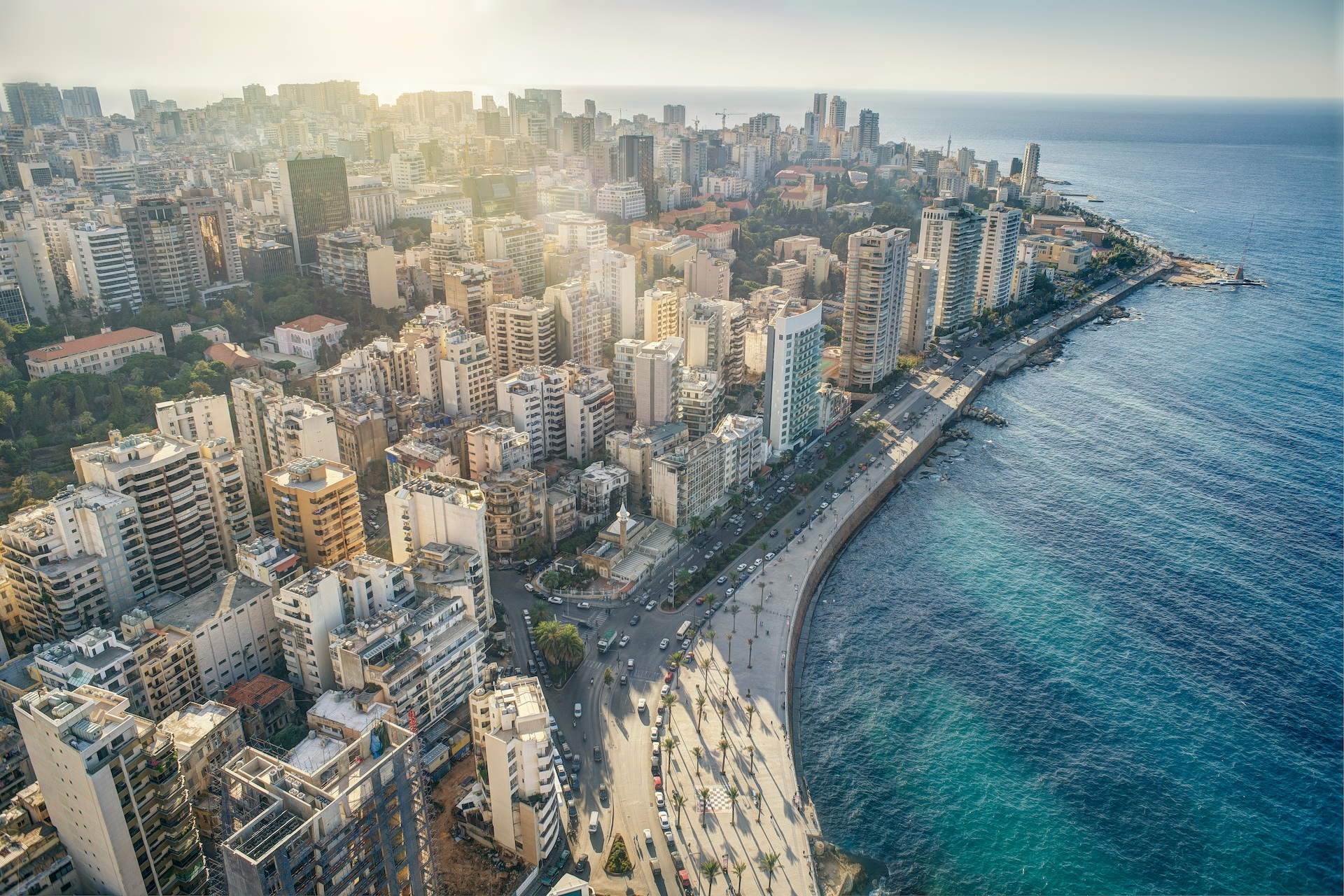
At two conferences held at the Lebanese American University in April 2025 to mark 50 years since the start of the civil war, Lebanese historians, activists, and policymakers reflected on the war’s legacy, and on the lessons the country must still learn to move forward.
Those who lived and studied the Lebanese civil war have a single message for the emerging generations: if we recreate the mistakes of the past or remain fixated on them, we will not succeed in rebuilding Lebanon.
Among the greatest divisions, there is still unity to be found. This was never clearer than when various experts and academics met to exchange views on the Lebanese civil war at two conference and lecture held at the Lebanese American University in April 2025, to commemorate the 50th anniversary of its start.
“The stance of Fighters for Peace is no more war”, says Ziad Saab, former militant and founding member of Fighters for Peace, an NGO which engages the youth, civil society activists, and ex-fighters, to build a lasting civil peace in Lebanon. Saab was 16 when the conflict began and he found himself carrying arms.
“The civil war did not take us anywhere,” he says, “ everyone who fought believed they were fighting for the best version of Lebanon. The parties that were fighting did not believe they were doing anything wrong, and the fight was a natural consequence of the reality at the time.”
The civil war, an unclosed chapter
“We did not deal with the consequences of the civil war, and instead implemented a policy of forgetfulness and amnesia, “ says political scientist Carmen Abou Jaoude. She noted that the civil war ended by an agreement between the Lebanese politicians and the warlords in 1990. Lebanese civil society and the victim’s groups were not included in this settlement.
“We have been asked to “forget” the war and move on with our lives but how can we do this?
There is no peace where there is no truth and no justice.”
Indeed, the conflict, which killed over 100,000 people and wounded 300,000 others, left 17,000 families reeling from the lack of information about their missing or forcibly disappeared relatives. For them, the war is not over.
Families have also been displaced for decades as a result of the war, many still unable to return to their villages. Fadi Abi Allam, President of the Green Party and government consultant, says: “There has been no constructive panel towards bringing people back.”
Historian and Lebanese author Dima de Clerck explained that a “characteristic of civil war is its persistence in memory, which complicates any attempt to write its history.”
“Even in peacetime,” she adds, “civil war mutates into a war of memory, sustained by rival historiographies, territorial markings, mutual mistrust between confessional groups, and the rejection of each other’s narratives.
As a result, civil wars rarely have a true conclusion.
The war was neither resolved nor its end commemorated. In this context, reclaiming the war as a subject of historical inquiry may first require that political actors step aside, making space for historians to speak freely.”
No historical consensus
History books in Lebanon stop at the year 1943, meaning generations of Lebanese are raised with no understanding of the civil war and its effects on individuals, communities, and a nation. Yet a destruction of records and documents, as well as a blockade on access to official resources by individuals or institutions has prevented historians and interested parties from gaining a comprehensive insight into the war, its causes, and the future. With the absence of such sources, there is an increased reliance on witnesses and experts.
Historian Fawwaz Traboulsi stresses in his lecture the importance of remembering the reality of pre-war Lebanon to get an accurate historical understanding of the context which led to the conflict. “If the golden age of Lebanon [the 60s] was so golden, how come it produced a war? What leads to civil war is social frustration, a break within Lebanese society based on sectarian grounds. Also among the causes was oppression by the state, and high levels of social divisions based on socioeconomic status; the Lebanese have tendency to behave as members of a class, a sect, a profession, identifying with whichever based on their personal priorities.”
Even the name “civil war” is a point of contention.
Dima de Clerck emphasizes that “The Lebanese war remains a war whose very name remains contested: “civil war,” “uncivil war,”, “Lebanese war,” “Lebanese wars,” “war for Lebanon,” “Lebanese tragedy,” “Lebanese quagmire,” or even “a war for others.”
She explains that perpetrators, actors, and even victims are often reluctant to recognize a civil war and name it as such. As a result, the Lebanese conflict is frequently referred to using terms that downplay its civil nature or externalize its causes and violence.
The war is still on the political agenda
Interest in the civil war is not purely historical curiosity, as continuous demands for justice and accountability have kept the conflict on the political agenda. The Lebanese civil war cannot be placed on the shelves of history when there is no agreed upon history, and no period of transitional justice or rehabilitation for the victims.
Civil activist and founder of the Committee of the Families of the Kidnapped and Missing in Lebanon Wadad Halawani, whose husband’s disappearance in 1982 became a key motivation behind her decades long activism said :
“Peace is very far away, we do not use the term peace, but after war.”
Thing is, peace is critical for development, and while many Lebanese continue to live in an “after war” state, development is on hold. Recipient of the Lebanese Order of Merit Mona Kanaan views peace and development as deeply intertwined. “There can be no lasting peace without sustainable development, and no meaningful development without a foundation of peace. These are very much connected. When communities suffer from conflict, instability, or injustice, their ability to grow economically, socially, and culturally is hindered. When development brings access to education, and economic opportunities, it helps build a culture of peace.”
Kanaan was shot over twenty times in the attack which led to her husband, Major General Khalil Kanaan’s assassination in 1986.
A constant battle
In the midst of the constant fight to create lasting conditions for peace, some progress has been noted.
The families of the Missing and Forcibly Disappeared advocated for years until until the government finally promulgated law 105 in 2018. The law recognizes their rights and establishes an independent National Commission for the Missing and Forcibly Disappeared with clear objectives and with the aim to provide the families of missing persons with answers.
It’s a first timid step towards justice.
But a lot can still be done.
Professor of Gender Studies at the Lebanese American University Lina Kreidie argues that
“True peace begins with rebuilding the human being.
I learned that psychological empowerment is the foundation for reconciliation. Working with an NGO that uses drama therapy, I witnessed the power of art and performance in addressing mental health issues like PTSD, anxiety, and depression. It is through such healing practices that individuals begin to reclaim their agency and communities begin to recover.”
Makram Ouaiss, Executive Director of the Lebanese Center for Policy Studies, argues for the need of a historical consensus untampered with by the political class promoted by academics, teachers, and artists.
Political scientist Carmen Abou Jaoude suggests using the information and testimonies which exist on the civil war to create a historical narrative, and to find a way for the truth to be used constructively to achieve a true peace and a genuine reconciliation.
She also argues for the need to set a National Day of Remembrance in Lebanon. Not a bank holiday, but a day where schools and universities across the country dedicate a single day to speak and discuss the civil war.
This is seconded by Makram Ouaiss, who advocates for the youth receiving an education rooted in the values of peace, diversity, and critical thinking, essential skills to interact constructively with others.
Ouaiss also emphasized the importance of the Lebanese learning the function and structure of government, currently missing in the education system.
In the words of peace activist Mona Kanaan; “We need to teach that we belong to Lebanon, are Lebanese under our flag, our cedar, and that we do not belong to politicians nor priests. After more than 50 years of war and wounds, I hope we’ve finally learned that conflict brings nothing but pain to our beloved Lebanon. It is time to rise above our differences, religious, political, or otherwise, and remember that we are Lebanese before anything else.”
