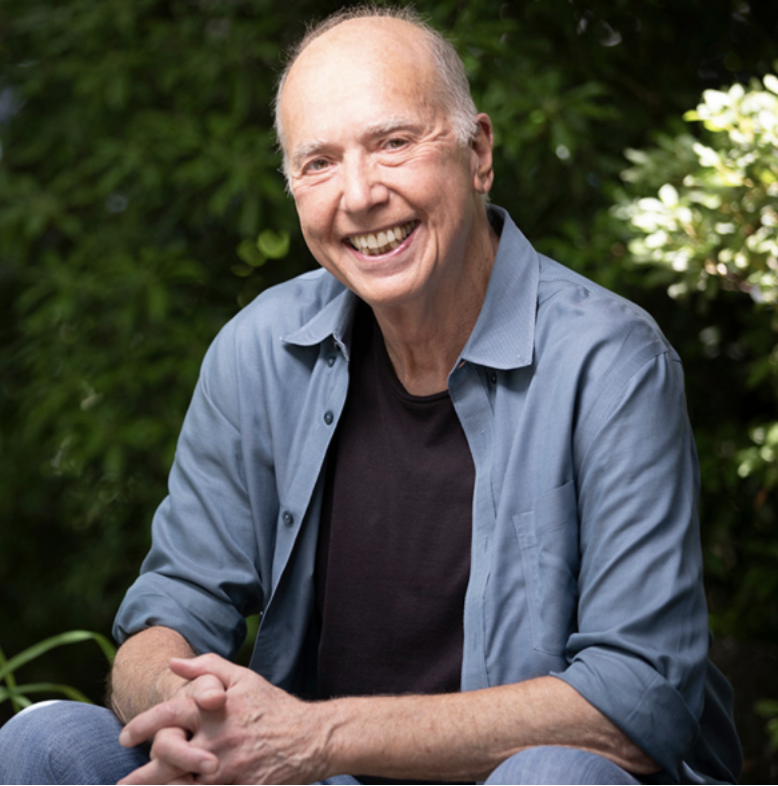
Dr. James Gordon does not describe himself as a peacebuilder. A psychiatrist and the founder of the Center for Mind-Body Medicine definitely, and an activist, perhaps.
Yet for more than three decades, his work has quietly shaped some of the most trauma‑affected societies in the world, helping people move from severe trauma to healing, and often, towards peace.
Trained at Harvard Medical School, Dr. Gordon is a former researcher in the U.S. National Institute of Mental Health, and a longtime writer and educator whose work has appeared in The New York Times, The Washington Post, and The Atlantic. In 1991, he founded the Center for Mind-Body Medicine (CMBM) in Washington, DC, with the idea of providing people with practical tools to care for themselves and each other.
What began with “about 25 volunteers…doctors, mental health professionals, teachers, and one professional gambler which I took as a good omen, and no money,” has now grown into a global organization with around 30 staff in Washington, 150 faculty around the world, and locally-led programs in places like Gaza, Israel, Kosovo, Ukraine, Haiti, sub-Saharan Africa, and the United States.
Today, the Center’s model is implemented in at least 20 U.S. medical schools, while its largest program operates in Gaza, where local teams continue to work under conditions of extreme danger and loss.
We sat down with him to learn from his experience about trauma, human connection, and how healing can transform relationships even in the absence of political agreements.
1- At the biological level, you cannot ignore trauma
“When people are traumatized there are two basic biological reactions,” Gordon explains. One is chronic fight‑or‑flight, hypervigilance, anxiety, irritability, insomnia. The other, when trauma is overwhelming and inescapable, is freeze. “They shut down and release endorphins to numb down the physical and psychological pain.”
He has seen this repeatedly in survivors of torture and political imprisonment. “They just totally shut off and they can’t feel much of anything.”
That is why the Center’s programs look unusual at first glance. Participants breathe deeply, draw, use guided imagery, trace family histories, and famously, shake and dance.
After 9/11, Dr. Gordon worked with NYC Firefighters who were initially sceptical about the shaking and dancing part of the Center’s program. “What is this, some sort of chick flick?” they scoffed. He laughs.
Yet these practices help “melt those trauma‑frozen bodies,” allowing emotion to surface safely within small groups. The program typically teaches 16 self‑care techniques and then trains participants to teach others, creating a multiplier effect.
Months into working with those sceptical NYC firefighters, one of the toughest among them, a lieutenant, gruffly pulled Gordon aside and said, “Hey, Jim. I get it. I get who you are. You’re just like us.[…] you like to help people and you like to be where the action is.”
After years of developing programs in the United States for healthcare workers and first responders, Dr. Gordon began asking whether the mind‑body approach could be useful “in some of the most troubled places on the planet.” This led him to work in Mozambique with former child soldiers, and in South Africa with families whose loved ones were killed during apartheid. As it turned out, biological trauma responses were universal, and so were the biopsychosocial tools for addressing them.
2- You don’t have to call it Peacebuilding. Bring people together by offering something useful
When asked what peacebuilding often gets wrong, Dr. Gordon’s response is blunt.
“We don’t talk about peacebuilding at all.”
“People in conflicts are likely to argue strenuously if an outsider talks to them about peace. My way is to give them the tools and the safe opportunity to make discoveries for themselves and to share them,” he explains. That is why the Center offers something everyone wants: skills, and relief from suffering.
In one workshop bringing together Palestinian and Israeli health and psychology leaders, an Israeli psychologist from Tel Aviv broke down while speaking about a painful, conflictual relationship with her daughter. In response, a Palestinian psychologist from Ramallah admitted she had spent days feeling resentment towards her Israeli counterpart, only to be moved in that moment to recognize how deeply similar they were.
This pattern repeats across contexts. In Kosovo, Serbs and Albanians who had been killing each other came together not in the name of peacebuilding, but to learn tools to deal with trauma.
3- It doesn’t have to be complicated and you do not have to be an expert, you just have to care
When the Center began working in Bosnia shortly after the Dayton Accords brought an end to the Bosnian War in 1995, the scale of devastation was overwhelming. “Several hundreds of thousands of people were killed. Tens of thousands women and men in rape camps. The divisions between the Bosniaks, Croats, and Serbs were just huge,” he explains.
“The time to work with people is not when the war is over, but when the war begins,” he realized. In other words, equipping people with the right tools before conflict is always a good idea.
That insight shaped what became CMBM’s pilot program in neighboring Kosovo. Within weeks of the war starting in 1998, Gordon and a colleague were working with people whose homes had been bombed and burned, as well as with UN peacekeepers. The Center trained over 600 people, including a leadership team of young psychiatrists, and the program continues more than 25 years later.
Results of the Center’s work are backed by research. One landmark randomized controlled trial conducted with high school students in a Kosovo region where “80 percent of homes were destroyed and 20 percent of high school kids lost one or both parents,” showed that after 12 sessions using mind‑body techniques, “82 percent of the kids qualifying for PTSD diagnosis no longer qualified.”
“The people leading those groups were not people like me with fancy degrees,” Gordon emphasizes. “They were all high school teachers with no background in psychology except for what we taught them. But they were smart people, and they cared about the kids.”
4- “Inner peace” is not a cliché, it’s a prerequisite to political agreement
In South Sudan, one of the Center’s faculty members, a human rights lawyer, suggested running a workshop with members of a fragile joint government while violence continued outside the capital. Eighty participants attended, including rival factions whose supporters were killing each other.
The Minister of Agriculture, despite being a “serious and severe looking man,” opened the session by saying, “there is no way to have outer peace if we do not have inner peace,” Gordon recounts.
The workshop nearly collapsed when participants began shouting accusations at each other about atrocities. Gordon recalls getting people “shaking and dancing and screaming to get out the anger,” followed by prayer and soft belly breathing. Eventually, the room settled.
Afterward, the head of psychiatry in the country said, “this is the best thing that has happened in our country. This is the first time I’ve ever seen people come together and talk about what’s going on. And not kill each other.”