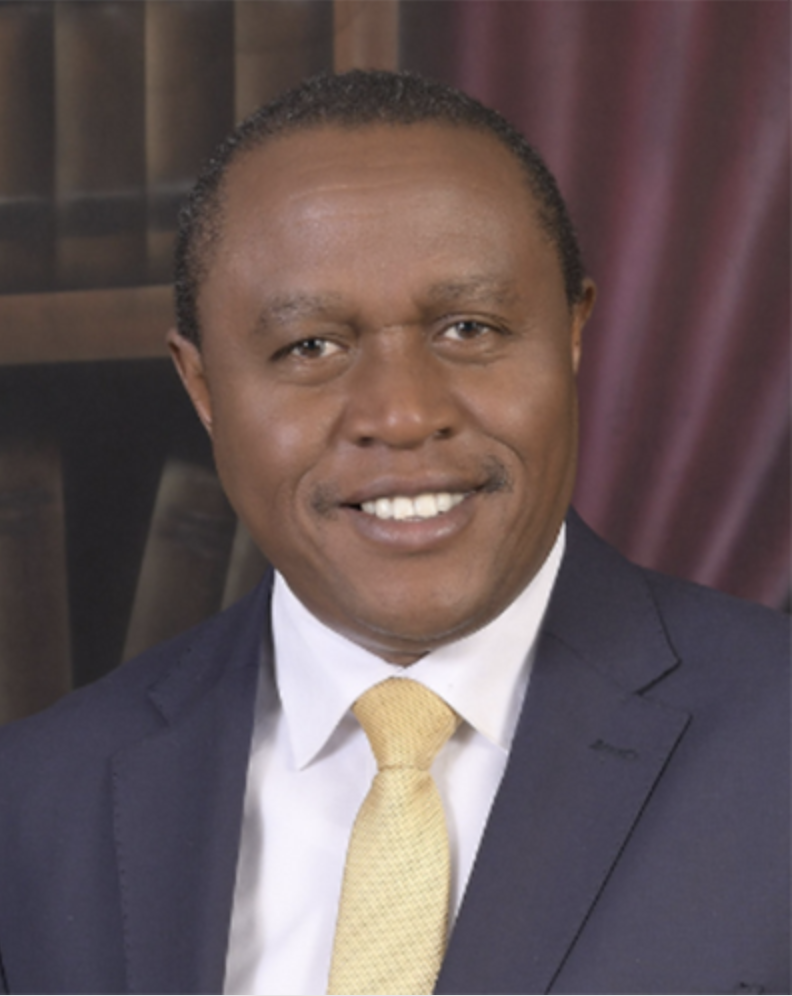
Dr. Francis Kuria never set out to become a peacebuilder.
“I was working as a development worker,” he says. After studying veterinary medicine, he found himself working within the humanitarian sector, particularly with women and children and in response to HIV and its devastating social consequences. Peacebuilding was not a career plan until, as he puts it, “conflict found me.”
In 2007, his home country Kenya was plunged into widespread violence following a disputed presidential election. The crisis exposed deep ethnic, political, and economic fractures in the country. More than 1,000 people were killed, hundreds of thousands were displaced, and the nation teetered on the brink of civil war.
Serving first as a program director, then as the Executive Director of the Interreligious Council of Kenya at the time, Kuria was called on to gather religious leaders to intervene in the midst of the chaos.
Today, he serves as Secretary General of Religions for Peace, the largest multireligious coalition of faith actors working for peace in the world. Headquartered in New York City, Religions for Peace brings together leaders from virtually every religious tradition, across more than 90 national and six regional interreligious councils.
Founded in 1970, the organization emerged from a recognition that religious communities, which Kuria says represent “over 80 percent of the world’s population” are associated with, possess immense moral authority, social trust, and grassroots reach. When coordinated across faith lines, that influence can become a powerful force serving peace, justice, and social cohesion.
Here are the primary lessons that have stayed with Kuria after over 20 years of interfaith work.
1. Peace Is Not the Absence of Violence
One of the most persistent misconceptions Kuria encounters is the idea that peace simply means no fighting.
“The biggest misconception,” he explains, “is to consider the lack of violence as peace.”
For Kuria, this misunderstanding overlooks structural injustice, the deep, often invisible systems that generate resentment, inequality, and instability long before violence erupts.
These structures include unequal access to land, political exclusion, economic exploitation, and the concentration of power and resources in the hands of a few. Even when streets are quiet, these dynamics can produce widespread discontent that eventually boils over.
“When people lack power,” he says, “when they lack control over their own destiny, violence can emerge. Even if it’s not directed at those actually responsible [in power].”
This is why conflict often manifests as communal or intercommunal violence, rather than direct confrontation with political or economic elites, he explains. The frustration created by structural injustice frequently turns inward, pitting communities against one another.
“The universal driver of conflict,” he says, “is power and resources,” across continents and contexts.
Because resources are finite, competition is inevitable. But conflict escalates when access to resources like land, water, minerals, and political authority is uneven or violently contested.
Kuria points to the Democratic Republic of Congo, where decades of conflict have been fueled by the colonial exploitation of natural resources, which benefitted external actors while local communities remained impoverished and militarized.
“Conflicts don’t have to end in violence,” Kuria notes.
“Conflict itself is normal. Violence is the result of how we handle it.”
2. Ego Turns Conflict into Violence
“What really sparks violence,” Kuria says bluntly, “is egocentric behavior.”
In his experience, many conflicts become violent not because compromise is impossible, but because individuals, most often “men in positions of power,” insist on imposing their will.
“There is this mentality of: what I say must go,” he explains. “That struggle for status, for dominance, drives situations that never needed to end in violence.”
Peacebuilding is not only a political process, but a deeply human one. Negotiation fails not because solutions don’t exist, but because people refuse to bend.
Disarming this ego, Kuria notes, requires creativity and a deep understanding of power dynamics. Sometimes the most effective entry points are indirect: spouses, institutional constraints, or governance structures that encourage shared decision-making.
“You have to disperse power, so people can accept other points of view.”
3. Force Is Temporary, Negotiation Is Durable
Another hard-earned lesson from Kuria’s work is that force rarely produces lasting peace.
“Any forceful solution,” he explains, “is likely to be temporary.”
True peacebuilding, by contrast, requires negotiation that accounts for all relevant factors: current realities, historical grievances, displacement, and long-standing injustice.
This principle was central to Kenya’s recovery after the 2007 crisis. In the years that followed, religious leaders helped facilitate a national dialogue process that contributed to the adoption of a new constitution in 2010 which was designed to address inequitable power-sharing, resource distribution, and governance failures.
While Kenya still experiences election-related tensions, Kuria emphasizes that the constitutional framework has helped prevent a return to mass violence.
“The mechanisms held,” he says. “And when tensions rise, we still bring religious leaders together for dialogue.”
4. Despite Divisions, Religion Can Be a Gateway and Tool for Peace
Religion, Kuria insists, must be understood honestly.
“Religion has been used many times to access power,” he says. Leaders may exploit people’s emotional attachment to faith, positioning themselves as protectors under threat, often to legitimize political authority or suppress dissent.
“There is status in religion,” he explains. “People compete within religious hierarchies just as they do in politics.”
Yet religion also carries a unique capacity to moderate human behavior.
Through teachings of compassion, mercy, forgiveness, and love, faith traditions can soften humanity’s “rough edges” : restraining greed, aggression, and unchecked acquisition.
This dual nature is why Religions for Peace focuses not on theological agreement, but on harnessing shared virtues.
Interreligious collaboration, Kuria emphasizes, is not about deciding which religion is “right.” “Every religious person believes their faith leads to ultimate truth,” he chides. “If they didn’t believe that they wouldn’t be religious!”
“The point is not competition. It’s how we use the virtues of religion to solve the world’s problems.”
5. Peace Requires a “Shared Sacred Worldview”
At the heart of Kuria’s vision is what Religions for Peace calls a “shared sacred worldview.”
He describes today’s dominant global mindset as reductionist and zero-sum, shaped by individualism, waste, and the belief that one person’s gain must come at another’s expense.
This worldview, he argues, fuels scarcity even in a world that actually has enough.
“There are enough resources for everyone,” Kuria says. “But how we manage them creates conflict.”
He offers a simple metaphor: a bus with fifty seats and fifty people. If everyone takes one seat, there is no problem. But if some take three, for their bags, their hats, their comfort, others are left standing.
Human flourishing, in his view, depends on learning to ask a different question: What does my neighbor need?
When societies consider not only their own security and prosperity, but also the wellbeing of others — neighboring communities, countries, future generations — conflict becomes less inevitable.
Peace, Kuria concludes, must be negotiated patiently, sustained through shared values, and is made possible when humanity remembers that it is fundamentally in this together.
For Religions for Peace, the task ahead is nothing less than a “shift in worldview.”