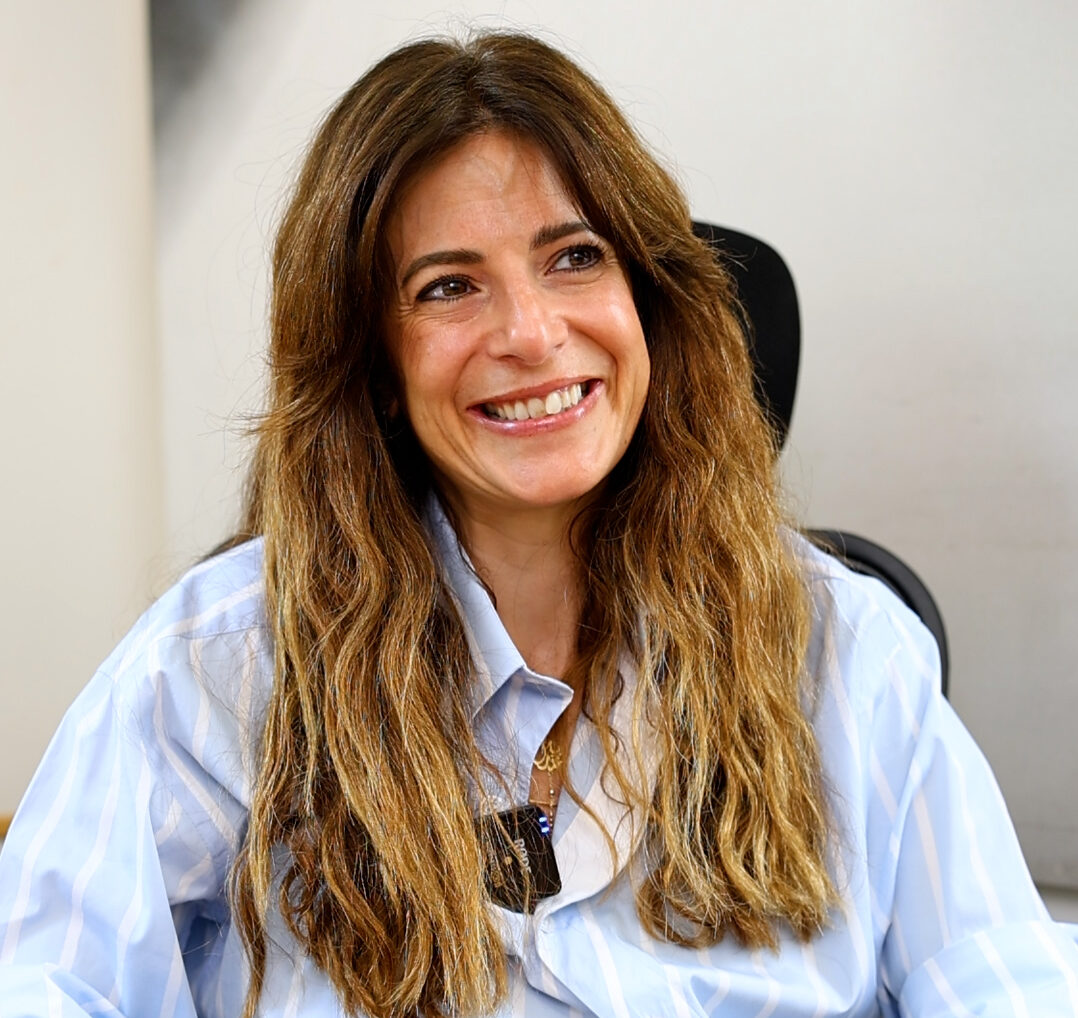
Lea Baroudi is the founder of MARCH Lebanon, an organization bringing divided communities together in Tripoli, Lebanon’s second largest city, since 2011.
During her years as a student at the American University of Beirut in the 90’s, shortly after the end of the Lebanese Civil War, Baroudi became intrigued by the fact that her generation continued to carry the sectarian divisions of a conflict [the Lebanese civil war, 1975-1991] that was “supposed to have ended”.
Years later, she would go on to find career success as a corporate consultant. But that curious voice inside her persisted until eventually, she pursued accreditation in conflict mediation while she continued her work.
The idea of bringing conflicting groups together first came together with “Love and War on the Rooftop”, an experimental play she put together, recruiting a cast of youth from Tripoli’s warring Bab-Al Tabbaneh and Jabal Mohsen neighborhoods.
Soon enough, what started as a theatre production flourished into a community and cultural center, and a full-fledged non-profit bringing together ex-combatants to facilitate community development and change.
In an interview with Baroudi on June 11, 2025, she shared her advice for peacebuilders and policymakers alike.
1. Be genuinely curious and non-judgemental
You can have the best programs and activities and understand the root causes of a conflict, but if you fail to “build genuine trust and create the human connections,” you will not get very far, Baroudi cautions. “I know each and every person that comes into the program better than everyone else because I have to and I want to,” she says.
“When you are genuinely curious, you don’t judge. And you make people feel seen.”
“If you don’t genuinely believe that you can change something, don’t work in that field,” she advises, because people sense your conviction, or lack of it.
2. Recognize conflict as being highly emotional
Baroudi emphasizes, “Conflict and radicalization… are emotional processes.” She critiques peacebuilding models that over-prioritize strategy over human experience. “If you don’t have this human emotional element in your work, you will fail.”
Baroudi identifies fear and marginalization as root causes of conflict. “When you marginalize a big segment of society… they will not feel a sense of belonging to a country.” That void is filled by ideology or extremism.
“It’s the need to belong, to matter… These are intrinsic human needs.”
3. Prioritize local immersion over distant expertise
Peacebuilders must immerse themselves in local contexts. She recalls when an expert at a conference questioned her knowledge, asking her “what do you even know?” about extremist groups.
“What do YOU even know,” she asked back. “Have you ever interacted with them besides maybe having an interview where you have access to prisons or similar? Have you lived with them? I’ve lived with them. Have you interacted with them on a daily basis? I have.”
Baroudi views peacebuilding as an art form. “I too have studied mediation. I can tell you I use 10 percent of what I’ve learned.” Instead, practical skills and emotional intelligence are key to “get people to talk to you.”
4. Understand identity and the power of your gaze
Inspired by Lebanese-French author Amin Maalouf, she notes:
“It is our gaze that locks people in certain identities, and it is our gaze that releases them.”
Peacebuilders must act as mirrors, seeing higher potentials and reflecting back individuals’ better selves.
“When one of the core components of your identity feels threatened, it overtakes your entire identity. If I perceive my identity as a Christian is threatened, I will be Christian first and foremost. And this is what happens in radicalization.”
5. Distinguish peacebuilding from activism
“You cannot be an activist and a peacebuilder at the same time,” she asserts. Activists take positions, peacebuilders need to build bridges.
She recalls the time an older beneficiary introduced her to his sixteen-year-old wife, who was pregnant with their second child. The activist in her wanted to turn him away, but the peacebuilder in her held space. “If I would have created a conflict with him, he would have taken his wife and himself and left. And nothing would have changed,” she said.
“At the end of the day the damage is done on a certain level. But at least you can make her life better.”