How does a woman from Beirut destined for a consulting career become the founder of a peacebuilding initiative in Tripoli?
By being genuinely curious about people, their stories, their motivations.
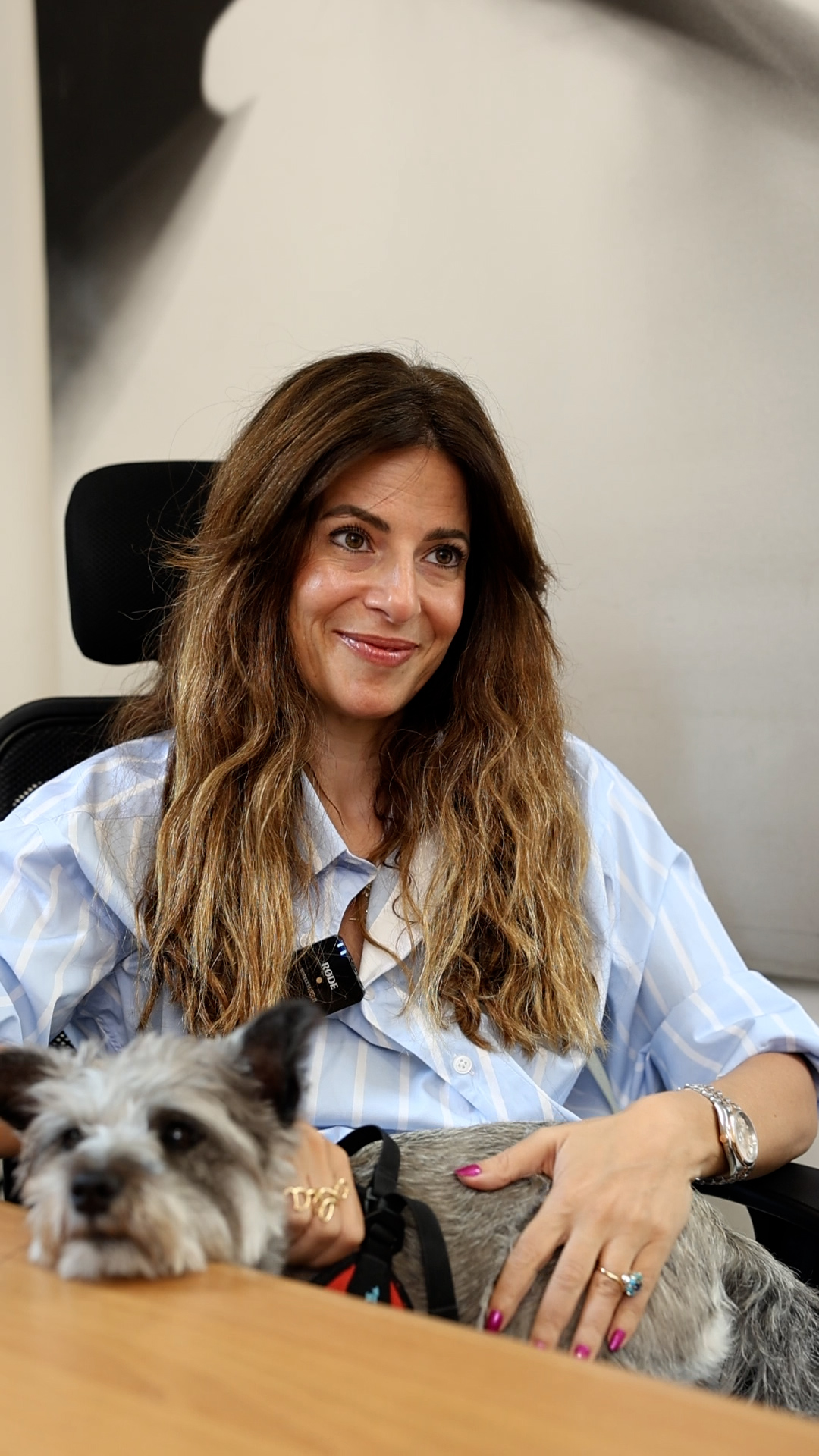
“When I finished High School my dream was to study psychology,” says Lea Baroudi, founder of MARCH Lebanon, an NGO working to promote social cohesion and personal freedoms in Tripoli, North Lebanon.
She wanted to understand “how the human mind works.” Parental pressure led her to pursue business at the American University of Beirut (AUB), though she subtly integrated her passion with a minor in psychology.
At AUB, she “released the divisions [from the civil war] were still there… even though the war was supposed to have ended,” she says. This realization made her ask herself: “Why is this being transmitted from generation to generation?” She deduced that the abrupt end of the Lebanese civil war, without a true “dialogue or truth and reconciliation process,” was a key reason.
Her professional life began in consulting, both in France and Lebanon, working for a top-tier firm. But she recalls that “I always had on the side this need to try and understand what was happening in my country.”
This led her to pursue a Master’s in mediation, driven by a desire to find “an unconventional way of resolving conflict.” A strong believer in the power of the arts, Baroudi wanted to “use theater to try and reconcile people who are on opposing sides, who perceive each other as enemies.”
In 2013, news reports were dominated by the clashes in Tripoli, specifically along Syria Street, which divided the warring neighborhoods of Bab el Tabbaneh and Jabal Mohsen. “I thought to myself, this is a great place to carry out a play,” she recalls.
From conception to execution, the journey took two years and faced relentless opposition. “NO ONE encouraged me,” Baroudi states. “Everyone I knew from experts, obviously family, friends, were completely against the idea. They were telling me this is naive, you’re gonna get yourself killed. These are hardened ideological fighters, they cannot change.” Her identity was used against her: ” You’re a woman, you’re not from the area, you’re not even from the same religion. You’re setting yourself up for failure.” The prevailing sentiment was that “Even a man can’t do this!”
Yet, what she describes as her “curiosity” propelled her forward.
Baroudi embarked on weekly trips to Tripoli, determined to gain access to the young men involved in the fighting. A government-imposed ceasefire offered a window of opportunity, making the atmosphere “a bit more calm.” After a year of persistent efforts, she finally garnered enough community support to hold auditions for “young men and women,” many of the men being former fighters. Sixteen individuals were selected for a play “inspired by their lives.”
The initial rehearsals for “Love and War on the Rooftop,” a title chosen because “everything in their lives…would happen on rooftops,” were fraught with challenges.
“I had to convince these young men every day to come to rehearsals. I had to drag them out of their beds, out of their homes,” she remembers. Their initial motivations for joining the rehearsals were pragmatic: “First because they wanted free food [which she provided during rehearsals]. And second, they wanted to share their side of the story.”
As one participant expressed,
“people see me and my community as either terrorists or very negative things, and I want to show them that we’re not like that.”
Sometimes, they came to the rehearsals with the intention to kill or hurt their perceived enemy. They arrived armed, with “razor blades under their tongues, knives in their socks. Guns in their pockets,” remembers Baroudi.
But as they began sharing their personal narratives, something changed. “This is when these friendships started to happen because they started to realize that they had a lot in common,” Baroudi explains.
The path was not smooth, marked by “many fights in the rehearsals” and moments when she questioned her endeavor. But eventually, “something clicked with these young men.”
The play toured Lebanon, receiving “standing ovations,” marking the organic beginning of March’s work in Tripoli.
The play’s conclusion left the participants with a sense of loss.
“What are we gonna do now?” they wondered. This led to a suggestion from some of the young men: “Why don’t we open a little cafe together after?” Baroudi recalls this as a “little lightbulb” moment.
Her proposal to open it on Syria Street itself was met with immediate fear: “No no no no. We should not open it on Syria Street,’ why? ‘because they will throw bombs at us.'” The participants had already faced accusations of “treason” and threats from their own communities for “fraternizing with the enemy.” Despite these fears, Baroudi convinced them, and “that’s how the story of March [the café] began.”
On the importance of genuine curiosity
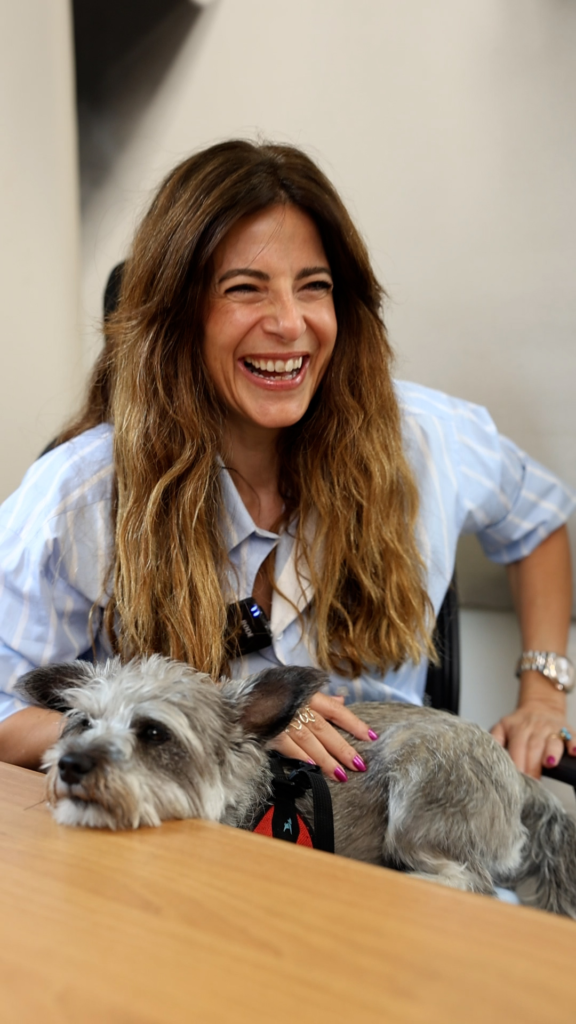
Baroudi underscores the importance of genuine curiosity in her work.
“When you are genuinely curious, you don’t judge. And you make people feel seen.”
She shares the story of a young man during rehearsals who initially intended to leave and fight in Syria with Jabhat al Nusra (a jihadist organization that fought against the Syrian regime during the Syrian Civil War and aimed to establish an Islamic state ruled by Sharia law in Syria). When she tried to talk to him to understand his motives, he dismissed her questions with “You won’t understand, you’re an infidel.” Baroudi’s persistent, non-judgmental questioning, led him to reveal he was stateless, unable to marry and have children in Lebanon. Baroudi convinced him to let her try to get him his papers, and she managed to get them for him.
He later told her: “I felt that this is someone I can trust. And maybe something can change.”
Ten years later, this same young man is a main coordinator at the center, and named his daughter Lea.
“These connections, these moments, if you do not have the real curiosity to understand, and not automatically think you know why these things happen… you can’t get very far,” Baroudi says. This philosophy is the bedrock upon which Lea Baroudi founded March Lebanon. “I know each and every person that comes into the program better than everyone else because I have to and I want to,” she explains.
Ongoing Challenges and Forward Vision
MARCH faces constant resistance. “There will always be backlash because war makes money,” Baroudi says. Extremists accuse MARCH of “corrupting minds,” and the café has faced Molotov attacks. But she sees strength in being underestimated, especially as a woman. “No one can see you coming until it’s too late.”
The Army, once skeptical, now protects the space. Former fighters turned peacebuilders use their credibility to dissuade threats.
Despite emotional tolls, Baroudi finds strength in her team. “What makes you continue is them. When you see how much impact you have made.”
Authenticity remains her cornerstone. “From the very first day I decided I am who I am.” She openly wears her cross (she is Christian) and stays true to her identity. She challenges the stigma around Tripoli. “I just want you to meet these people and when you meet them you’ll love them.”
Looking ahead, Baroudi plans to open an academy focused on practical peacebuilding skills. “People need more people that understand these skills.”